

Acne scar care in Newhall, CA, backed by decades of clinical medicine and advanced training in energy-device treatment.
If acne has left scars, pitting, or uneven texture, a physician-led plan can reduce their appearance and rebuild your skin’s surface. At Discovery Skinworks, our Newhall, CA acne scar treatment is performed by licensed physicians, not technicians following a fixed protocol, and every plan begins with a free consultation and a careful assessment of your skin. Contact us today to get started.
Acne Scar Treatment in Newhall, CA
A cosmetic medical practice approaches the skin as medicine rather than relaxation. We use energy-based devices and clinical-grade treatments to remodel scar tissue and rebuild collagen where acne has caused damage. People come to us at every stage. Some are years past their breakouts and frustrated by the texture left behind. Others are still managing active acne and want to limit the scarring before it sets.
We see teenagers, working adults, and patients well into their later years. Skin tone matters here, because deeper Fitzpatrick types carry a higher risk of pigment changes, and the settings we choose reflect that. Acne scarring on the cheeks, temples, and jawline behaves differently than marks on the chest or back. Your plan accounts for where the scars are, what type they are, and how your skin tends to heal.
Acne Scar Treatments We Offer in Newhall
No single device erases acne scars. Skin usually holds more than one kind of scarring at once, and each type responds to a different approach, so we combine methods rather than rely on a single device. The following menu gives an overview of the treatments and tools we offer when building acne scar treatment plans:
- RF microneedling with Potenza. This pairs fine needles with radiofrequency energy to reach the deeper layers where scar tissue forms. The controlled injury prompts your own collagen to rebuild and smooth depressed scars. We use it frequently for rolling and boxcar scarring on the cheeks.
- Fractional laser resurfacing. Our non-ablative fractional laser creates microscopic columns of treated skin that trigger healing without stripping the full surface. It works on texture, tone, and the shallow scarring that follows inflammatory breakouts. Most patients tolerate it well with limited downtime.
- IPL photofacial. Intense pulsed light targets the brown and red marks acne leaves behind, the discoloration many people mistake for permanent scars. It does not resurface texture, so we combine it with other methods when both color and contour need attention.
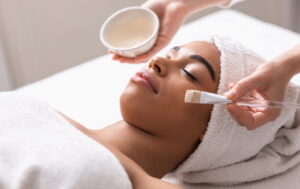
- Chemical peels. Medical-grade peels lift dull, damaged surface layers and can soften shallow scarring and post-acne pigment over a series. Our medical esthetician selects the strength based on your skin, not a fixed protocol.
- Acne facials with extractions. For patients still breaking out, professional extractions and corrective facials calm active acne and quiet the inflammation that drives new scars. Controlling active breakouts is part of preventing further scarring.
- Active acne management. Scars keep forming as long as acne is active. We address the breakouts first when needed, because protecting clear skin is the most dependable way to prevent the next round of damage.
- Custom home care. Your routine between visits affects the final result. We guide a home regimen, usually built around sunscreen and collagen-supporting products, that protects the work done in the office.
Why Choose Discovery Skinworks for Acne Scar Treatment in Newhall, CA?
Physician-Owned and Physician-Operated
As a medical spa, we operate differently than a day spa. Energy-based treatments are performed by physicians, and the level of clinical judgment that guides your care reflects that distinction at every step. Daphne Horowitz, MD and Paul Horowitz, MD founded the practice and brought decades of clinical medicine to it, along with advanced training in energy-based treatment and neuromodulators. They are candid about their training: physicians practicing cosmetic skin medicine, not dermatologists. Unlike national chains that apply identical settings to every patient and push add-ons, our doctor-owned and operated practice builds each plan around the individual.
Care Built Around Your Skin and Budget
Not every scar calls for a laser, and some patients are better served by surface treatments first. Our medical esthetician, Denise Plata-Reyes, performs peels, extractions, and corrective facials for those who need surface work or are easing into treatment. Consultations are free, so you receive a clinical assessment before committing to a plan. Because a full course of scar revision is an investment, we offer flexible payment plans that spread the cost over time. Patients often present with more than one concern, from rosacea redness to lingering sun damage, and we address the full picture. The before-and-after acne results we share reflect this same collagen-building approach.
Understanding Acne Scar Care
Conditions We Treat and Treatment Options
Acne scars are not all the same, and the type you have determines what actually helps. Atrophic scars, the sunken kind, are the most common after inflammatory acne. Raised scars and discoloration follow their own rules. Before any device touches your skin, we identify the scar type and its location.
- Ice pick scars. These narrow, deep pits look as if the skin was pricked and often call for focused resurfacing or in-office techniques rather than light treatments alone.
- Boxcar scars. These broader depressions have defined edges and are common across the cheeks and temples. Collagen-rebuilding methods such as RF microneedling tend to help here.
- Rolling scars. These wave-like dips are caused by tethering beneath the surface and respond to treatments that remodel the deeper layers of skin.
- Post-inflammatory pigment. The brown or red marks left after a breakout are a matter of color, not texture, and they often fade with light-based treatment and steady sun protection.
- Raised scars. Less common with facial acne but possible, raised scars require a different approach. We will tell you plainly if another setting would serve you better.
Standard options across these types include microneedling, radiofrequency, fractional laser skin resurfacing, chemical peels, and, for some patients, in-office surgical techniques. The right combination depends on the scars being treated.
What Should You Expect from Acne Scar Treatment?
- A free consultation first, where we examine your skin, ask about your acne history, and explain which methods fit.
- A plan that usually layers a few treatments rather than leaning on one device.
- Some temporary redness or swelling after energy-based sessions, much like a mild sunburn, that settles over a few days.
- Gradual change as collagen rebuilds, not an overnight transformation.
- Clear guidance about what is realistic for your scar type and skin tone.
What Is the Typical Treatment Timeline?
- An initial consultation and skin assessment, with no obligation to move forward.
- A series of treatments, often spaced several weeks apart to let the skin recover between sessions.
- Active acne addressed early when breakouts are still occurring.
- Visible improvement that builds over months as new collagen matures.
- Maintenance or touch-up sessions later, depending on how your skin responds.
Timelines vary with your scar type, your skin tone, and how your body heals. We do not promise a fixed number of sessions before we have seen your skin in person.
What Should You Bring to Your First Visit?
- A photo ID.
- A list of current medications and supplements, including any recent isotretinoin (Accutane) use, which affects when treatment can safely begin.
- The skincare products and active ingredients you use now.
- A clean, makeup-free face when possible, so we can read your skin accurately.
- Any questions about treatment, downtime, or cost.
The first visit centers on assessment and discussion. We will examine your skin and explain our recommendations before you decide whether to proceed.
What Are Some Important California Skin Care Resources?
Good information helps you make a sound decision. Before choosing any provider in California, you can confirm credentials and read up on treatments through public, noncommercial sources. We point patients toward these:
- License verification. The Medical Board of California lets you confirm that a physician is licensed and in good standing before your first appointment.
- Condition information. MedlinePlus, from the National Library of Medicine, offers plain-language background on acne and how it affects the skin.
- Device safety. The U.S. Food and Drug Administration publishes consumer guidance on microneedling devices, including their cleared uses for facial acne scars and the associated risks.
- Treatment guides. The American Academy of Dermatology maintains patient resources on acne scar treatment written by board-certified dermatologists.
None of these replace a clinical evaluation. They are a starting point, not a substitute for an evaluation by a provider who can examine your skin.
Contact Discovery Skinworks
If you are considering treatment for acne scars, the next step is a free consultation. We will provide a clear assessment of your skin and explain what is realistic. You will meet the providers who would perform your treatment and review the methods suited to your scar type, what each one involves, and how a plan might progress. There is no obligation to schedule treatment at that visit. Contact us to arrange your consultation, and our office will follow up to find a suitable time. We care for patients from across Newhall and the wider Santa Clarita Valley.
Acne Scar Statistics in Newhall, CA
 Roughly 50 million Americans experience acne in any given year, making it the most commonly diagnosed skin condition in the United States. A meaningful share of those cases produces scarring that persists long after breakouts have resolved, and the Newhall patients we see reflect the same pattern documented in the broader clinical literature. What draws people to a physician-led practice is not the presence of a scar, but the recognition that a specific type of scarring calls for a specific type of intervention.
The following figures give context for the burden of acne and the trajectory of scar treatment in the U.S., drawn from NIAMS and peer-reviewed reviews summarized by the American Academy of Dermatology.
- Approximately 85% of people between ages 12 and 24 experience some form of acne, and roughly 15% of that population develops severe cases that leave lasting scarring.
- Studies estimate that around 80% of patients with acne develop some degree of scarring, and about 50% have scarring severe enough to warrant clinical treatment.
- Female patients account for nearly two-thirds of dermatology visits related to acne, with the average patient age now sitting around 24 years old rather than the traditional teen demographic.
- Global acne prevalence has climbed measurably between 1990 and 2021, with adolescent and young adult cases rising in nearly every country tracked in the Global Burden of Disease study.
- Radiofrequency microneedling combined with topical or in-office adjuncts has produced patient satisfaction scores in the 85-95% range across recent randomized controlled trials of atrophic scar treatment.
Numbers alone don’t tell a Newhall patient what to expect from their own skin. They do underscore that scarring is common, that treatment options have improved substantially in the past decade, and that outcomes depend on matching the right method to the right scar type.
Factors That Affect Acne Scar Treatment Outcomes
Two patients with visually similar scarring can respond very differently to the same treatment plan. Understanding what drives those differences helps set realistic expectations and shapes the recommendations we make during a consultation. The factors below account for most of the variation in results.
- Scar type and depth. Ice pick scars require different tools than boxcar or rolling scars. Shallow atrophic scars respond faster than deeper ones. A treatment that produces significant improvement in one scar pattern may produce minimal change in another, which is why identification comes first.
- Skin tone and Fitzpatrick type. Darker skin tones carry higher risk of post-inflammatory hyperpigmentation from energy-based treatment. Settings, wavelengths, and protocols shift substantially across the Fitzpatrick spectrum, and matching device parameters to skin type protects against unintended pigmentation changes.
- Age of the scar. Older scars have more established collagen architecture that takes longer to remodel. Newer scars, particularly those within the first year of formation, often respond more quickly. Neither is a dealbreaker, but the timeline differs.
- Whether active acne is still present. New breakouts continue producing new scars. Any treatment plan that ignores ongoing acne activity is building on unstable ground. We address active inflammation before or alongside scar revision, not after.
- Individual healing response. Two patients can receive identical treatments with identical parameters and heal differently based on genetics, general health, and skin biology. Some skin produces collagen abundantly during the healing phase, while others need additional stimulation across more sessions.
- Consistency with the treatment series. Skipping sessions, spacing them irregularly, or discontinuing partway through a planned course reduces cumulative results. The biology of collagen remodeling depends on sequential stimulation over months rather than one dramatic intervention.
- Home skincare between visits. Retinoids, antioxidants, and appropriate exfoliants extend the results of in-office treatment. A poorly-matched or inconsistent home routine can undercut the work done during clinical sessions.
- Sun exposure during the treatment course. UV exposure between sessions triggers inflammation and can produce compensatory pigmentation that competes with the tone improvements you’re trying to achieve. Daily broad-spectrum sunscreen is not optional during scar revision.
- Isotretinoin history and timing. Recent isotretinoin (Accutane) use affects when energy-based treatment can safely proceed. Most protocols require a six-month gap after finishing isotretinoin before ablative or fractional laser treatment. Microneedling timelines can differ. Full disclosure of medication history matters.
- Combination versus single-modality plans. Complex scarring rarely responds fully to one device. Combination approaches that pair radiofrequency microneedling with fractional laser, or add chemical peels and topical actives, generally outperform single-modality plans for mixed scar patterns.
- Expectations calibrated to realistic outcomes. Acne scars fade and improve. They rarely disappear completely. Patients who understand this from the start report higher satisfaction than those expecting flawless post-treatment skin.
- Provider experience and clinical judgment. The person operating the device matters more than the device itself. Adjusting depth, energy, coverage, and sequencing based on live skin response is where physician training makes a measurable difference in outcomes.
Newhall Acne Scar Treatment FAQs
How many sessions does acne scar treatment usually require?
Most patients complete three to six sessions spaced four to six weeks apart. Complex or deeper scarring may require additional sessions, and combination protocols often extend the overall timeline. We give a specific range after examining your skin during the consultation rather than promising a fixed number in advance.
How much improvement is realistic?
Well-matched treatment typically produces 40-70% improvement in scar visibility across a full series, depending on scar type and individual response. Rolling scars often show the most dramatic change. Ice pick scars tend to be the most resistant. Combination protocols generally exceed single-modality results.
Can teenagers have scar treatment?
Yes, though timing matters. Active acne needs to be under reasonable control first, and adolescent skin sometimes responds better to gentler protocols like microneedling and topical treatment before more aggressive resurfacing. Documented radiofrequency microneedling results from our practice show what younger patients typically achieve.
Is treatment painful?
Discomfort varies by procedure. RF microneedling produces warm, prickling sensations that most patients tolerate well with topical numbing. Fractional laser feels similar. Chemical peels create tingling or mild burning. We adjust intensity throughout each session based on your feedback, and no session should feel unbearable.
How much downtime should I plan for?
Non-ablative fractional laser and RF microneedling typically produce redness and minor swelling for two to four days. Most patients return to work the following day. Chemical peels produce peeling that visibly resolves over 5-7 days. Ablative treatments involve longer recovery, which is one reason we favor non-ablative platforms for most patients.
Can I combine acne scar treatment with other cosmetic procedures?
Yes, when the treatments are compatible in timing and skin recovery. Injectable treatments like Botox generally don’t conflict with scar revision plans. Chemical peels between energy-based sessions can extend results. Combining fractional laser and IPL in the same session is usually avoided due to cumulative energy load.
Does insurance cover cosmetic scar treatment?
No. Cosmetic scar revision is not covered by health insurance in California or elsewhere. Some medical dermatology visits for active acne may be covered through a treating physician, but the aesthetic procedures we perform for scar improvement are paid out of pocket.
How do I know which treatment is right for my scars?
The consultation is where that determination gets made. We examine your skin under proper lighting, identify the scar types present, factor in your skin tone and medical history, and outline the specific treatments that match your pattern. Our fractional laser outcomes from prior patients help illustrate what different scar types typically achieve.
Can I still develop acne scars after treatment?
Yes, if new breakouts occur. Scar revision addresses existing damage but doesn’t prevent future scarring from ongoing acne. That’s why acne control is a foundational part of every scar treatment plan, and why patients still experiencing active breakouts should address the underlying inflammation first.
Important Resources for Newhall Acne Scar Cases
Acne Scarring Patterns Common in Newhall Patients
Newhall patients often present with mixed scar patterns rather than a single scar type. The most common combinations we see involve boxcar scarring across the cheeks from adolescent inflammatory acne, ice pick scarring concentrated in the temple areas, and rolling scarring along the jawline.
Post-inflammatory pigmentation, particularly in patients with olive or darker skin tones, frequently accompanies the depressed scarring and requires its own treatment approach. Adult-onset acne scarring, which we see with growing frequency in patients well past their teens, tends to concentrate along the lower face and jawline where hormonally-driven breakouts occur. Understanding these patterns helps us build treatment plans that address the actual mix on your skin rather than a generic acne scar template.
Important Local Resources for Newhall Acne Scar Care
The following resources may help patients seeking additional medical evaluation, dermatology support, or acne-related educational information.
- Los Robles Regional Medical Center — 215 West Janss Road, Thousand Oaks, CA 91360 | (805) 497-2727. Full-service regional hospital serving the Conejo Valley and surrounding areas with emergency services, specialty medical care, and dermatology referrals.
- AAD Find a Dermatologist — National directory maintained by the American Academy of Dermatology to help patients locate board-certified dermatologists for medical acne treatment beyond aesthetic scar revision.
- National Institute of Arthritis and Musculoskeletal and Skin Diseases — NIH resource providing detailed information on acne causes, treatment approaches, and current research relevant to patients dealing with active acne alongside scar concerns.
Disclaimer: Discovery Skinworks provides this list of resources for informational purposes only. Inclusion does not constitute endorsement, affiliation, or recommendation of any of the listed organizations.
About Discovery Skinworks
Discovery Skinworks is a physician-owned cosmetic medical practice in the Santa Clarita Valley, serving Newhall patients across every age bracket and skin type. Our founding physicians combined bring more than sixteen years of experience with laser and energy-based device treatment, which we apply directly to complex scar patterns that would otherwise require piecemeal care across multiple providers. Our practice does not push add-on services or introductory package deals; every recommendation reflects clinical judgment applied to the specific scar mix in front of us.
What Our Clients Say
★★★★★
“My experience with Dr Horowitz has been great. Very welcoming, friendly and I felt very comfortable during my visits. I begun the RF micro needling procedure early this year and completed 3 sessions. I am very happy with my results. It has been over 6 months and I can certainly see how my skin has improved.”
— Kristel Rawlins
Read more reviews on our Google Business Profile.
Additional Resources for Newhall Acne Scar Cases
- Non-Invasive Ways to Refresh Your Skin
- Skin Rejuvenation Treatments to Restore Your Youthful Glow
- Skin Rejuvenation vs Skin Resurfacing
- How Non-Surgical Skin Tightening Works
Contact Discovery Skinworks
Scarring that has settled over years won’t respond to a one-size-fits-all approach, and picking the right combination of treatments requires an in-person evaluation of your actual skin. A consultation gives our physicians the chance to identify the specific scar types you’re dealing with, discuss what improvement looks like over a treatment series, and outline realistic pricing without pressure to book on the spot. Consultations are free, and same-week appointments are typically available at our Santa Clarita location. Contact us to arrange a visit convenient for patients coming from Newhall and neighboring communities.
Not Medical Advice: Nothing on this website should be taken as medical advice, and no information provided is a substitute for consultation with your own physician. Results will vary.